 ChampLeagueFinalBet
 Professional Value Betting Methods
 Available in US
The moment those Champions League final odds drop, something magical happens. Millions of bettors worldwide start hunting for that golden nugget—the bet that offers genuine value, not just the illusion of a good price. But here's the thing most people don't realize: finding value in Champions League final odds isn't about picking winners. It's about understanding when the market has made a mistake and having the courage to exploit it.
I've been tracking Champions League final odds movements for over a decade, and if there's one thing I've learned, it's that the market tells stories. Sometimes it whispers about an injury that hasn't been announced yet. Other times it screams about public money flooding in on a popular team. Learning to read these stories—that's where the real edge lies.
Find overvalued prices on our UCL final hub.
Understanding How Champions League Final Odds Are Created
Before we dive into finding value, let's pull back the curtain on how bookmakers actually create these odds. It's not some guy in a smoky room picking numbers out of thin air. Modern odds compilation is a sophisticated blend of statistical modeling, market analysis, and risk management that would make Wall Street traders jealous.
The process starts months before the final. As soon as the semi-finals conclude, initial odds are generated using complex algorithms that factor in everything from historical head-to-head records to the average height of each team's defenders. These models crunch numbers on possession statistics, expected goals, defensive actions, and dozens of other metrics. But here's where it gets interesting—the initial odds are just the starting point.

Once those odds hit the market, they begin their journey of constant adjustment. Every bet placed nudges the line slightly. A respected syndicate dropping fifty thousand on the underdog? The odds shift immediately. News breaks about a star player's fitness concern? Another adjustment. The weather forecast changes from sunny to rainy? You guessed it—the odds move again.
What most bettors don't understand is that by the time the Champions League final kicks off, the odds reflect not just the bookmaker's opinion, but the collective wisdom (and foolishness) of millions of bettors. It's like a massive, real-time prediction market where every participant votes with their wallet. The challenge is figuring out when that collective wisdom has turned into collective delusion.
The margin—or overround as professionals call it—is where bookmakers make their money. On a typical Champions League final, the combined implied probability of all outcomes will add up to around 105-108%. That extra percentage is the bookmaker's edge. But here's the secret: not all bookmakers apply the same margins, and those differences create opportunities for value hunters.
The Art of Line Shopping
Line shopping for Champions League final odds is like being a savvy consumer who checks prices at different stores before making a major purchase. Except in this case, even tiny differences can mean the difference between long-term profit and loss. Let me show you what I mean with real numbers.
Say Manchester City is playing Real Madrid in the final. At Bookmaker A, City is priced at +150. At Bookmaker B, they're +160. That ten-point difference might seem trivial, but it represents a 2.5% difference in implied probability. Over time, consistently getting the best price is the difference between being a winning bettor and a losing one.
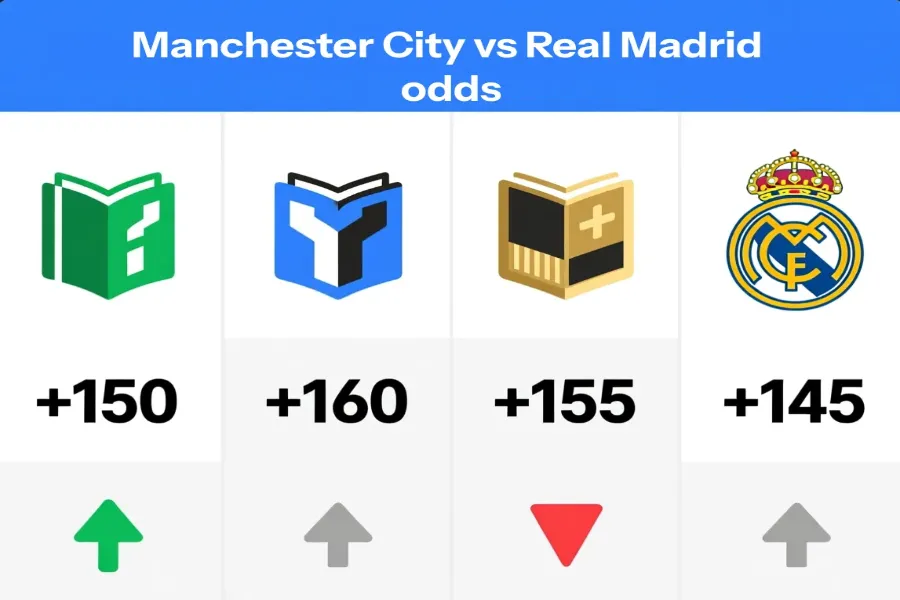
The variation in Champions League final odds across different bookmakers can be shocking. I've seen differences of twenty points or more on the same selection, especially in prop markets where bookmakers haven't invested the same resources in line setting. Asian bookmakers often have completely different perspectives than their European counterparts, creating arbitrage opportunities for those quick enough to spot them.
But here's what separates amateurs from professionals: timing your line shopping. Odds for the Champions League final don't just vary between bookmakers; they vary across time at the same bookmaker. Understanding when to pull the trigger requires tracking odds movements obsessively and recognizing patterns.
Sunday evening, right after the premier league matches conclude, is often when you'll find the softest lines. Bookmakers are focused on settling weekend bets and haven't yet adjusted for any weekend developments. Tuesday morning, after the Champions League press conferences, is another window where odds might not immediately reflect new information.
The European bookmakers typically lead the market in soccer odds, so when Pinnacle or Bet365 moves their line, others follow like dominoes. But there's always a lag—sometimes minutes, sometimes hours—where you can still grab the old price at slower-moving bookmakers. This is where having accounts at multiple books pays dividends.
Identifying Market Inefficiencies
Market inefficiencies in Champions League final odds are like cracks in a seemingly perfect wall. They're hard to spot unless you know exactly what to look for, but once you find them, they can be incredibly profitable. Let me share some patterns I've noticed over the years.
The public bias toward attacking teams and recent form creates consistent inefficiencies. When Liverpool's front three were terrorizing defenses, their Champions League final odds were always a few points shorter than they should have been. The market overvalued their goal-scoring potential while undervaluing the fact that finals turn attackers into defenders.
Here's another inefficiency that appears like clockwork: the favorite-longshot bias in correct score markets. Casual bettors love to dream big, so they'll bet on 4-3, 3-2, and other high-scoring results. Meanwhile, 1-0 and 0-0 often offer tremendous value because they're boring scores that don't capture the imagination. I've made more money backing 1-0 at +600 than any other single bet type in finals.

The timing of odds releases creates another inefficiency. When bookmakers first post their Champions League final odds, they're essentially flying blind on public sentiment. They know the true probability, but they don't know where the money will flow. Sharp bettors who can predict public betting patterns can get in before the lines adjust.
Consider what happens with player prop markets. First goalscorer odds often don't account for the tactical changes that finals bring. That striker who's been scoring for fun might find himself isolated as his team sits deep. Meanwhile, a defensive midfielder might offer value at 40/1 because managers often instruct them to take long shots when teams park the bus.
Exchange betting adds another layer of inefficiency-hunting opportunity. The odds on Betfair or Smarkets represent what actual bettors are willing to lay and back, not what a bookmaker thinks. Sometimes the exchange prices are way out of line with traditional bookmakers, especially on less popular markets where liquidity is lower.
Real-Time Odds Tracking Methodology
Tracking Champions League final odds in real-time isn't just about refreshing your browser obsessively—though I'll admit to doing that more than I should. It's about developing a systematic approach to monitoring multiple markets across multiple bookmakers simultaneously.
Professional bettors use specialized software and odds comparison sites, but you don't need expensive tools to track effectively. A simple spreadsheet updated every few hours can reveal patterns that casual bettors miss. Track not just the odds, but the movement direction and velocity. A line that moves from +150 to +140 over a week is different from one that makes the same move in an hour.
The key metrics to track are:
- Opening line versus current line
- Steam moves (rapid odds changes due to heavy betting)
- Reverse line movement (odds moving against the betting percentage)
- Closing line value (the final odds before kickoff)
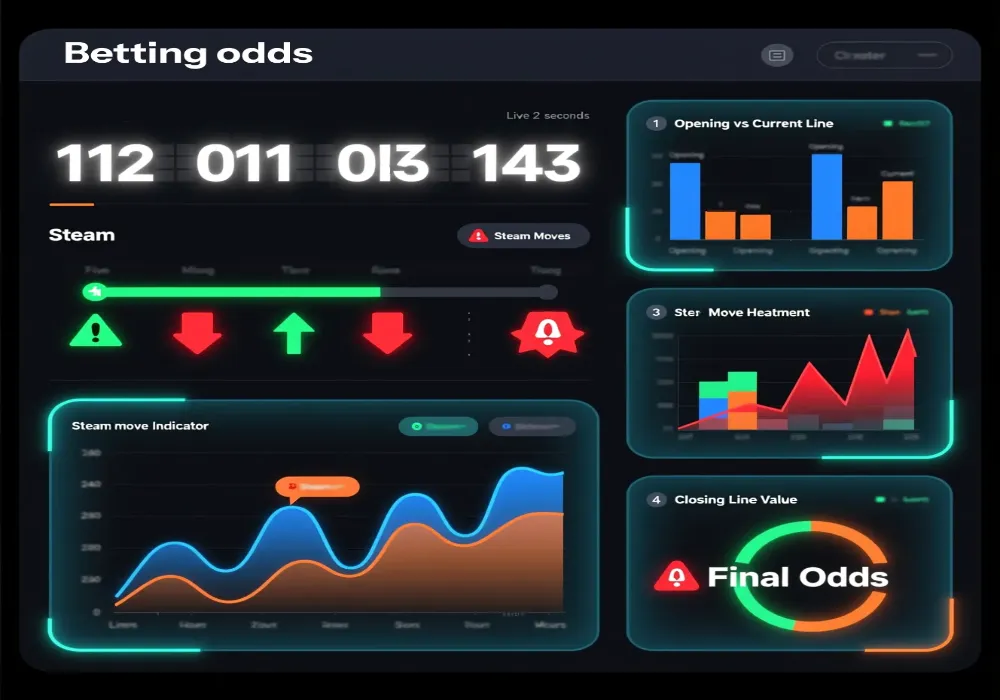
When tracking player props, pay special attention to odds movements in the 24 hours before team sheets are announced. Smart money often knows something about tactical setups or fitness issues before it becomes public. If you see unusual movement on whether a player will start or his goal-scoring odds, there's usually smoke before the fire.
Live odds tracking during the match itself is an art form. The market overreacts to everything—a shot that goes wide, a player warming up on the sideline, even the body language of managers. These overreactions create windows of value that last seconds or minutes. Having multiple bookmaker tabs open and being ready to pounce is essential.
The most valuable tracking happens in the dead zones—those moments when nothing is happening on the pitch but the odds are still moving. This is often smart money positioning itself for an expected change. If the odds on over 2.5 goals start shortening during a dull passage of play, someone might know a tactical shift is coming.
Historical Odds Accuracy Analysis
Looking back at how Champions League final odds have performed historically provides sobering insights into market efficiency—and inefficiency. The favorite, defined as the team with the shortest odds, has won in regulation time in just eight of the last twenty finals. That's a 40% success rate when the average implied probability suggested they should win about 55% of the time.
This persistent underperformance of favorites isn't random variance—it's a structural feature of how finals are different from regular matches. The market prices favorites as if the final is just another game, but the psychological pressure, tactical conservatism, and single-elimination format compress the skill gap between teams.
Even more interesting is how specific odds ranges perform. Teams priced between +200 and +300 (implied probability of 25-33%) have actually won more finals than teams priced under +150. This sweet spot represents good teams who aren't overwhelming favorites—exactly the type who thrives in the pressure-cooker atmosphere of a final.
The accuracy of totals markets shows another pattern. The under has beaten the closing total in thirteen of the last twenty Champions League finals, despite being priced as roughly a 50-50 proposition each time. The market consistently overestimates scoring in finals, creating a structural edge for under bettors.
Draw odds in regulation time have offered the best value historically. Priced at an average of +230 across the last twenty finals, the draw has occurred eight times—an implied probability of 30% versus actual frequency of 40%. That's a massive edge that compounds over time.
But here's the crucial point: historical performance doesn't guarantee future results. The market learns and adapts. The inefficiencies that existed five years ago might be gone today. That's why combining historical analysis with real-time market reading is essential.
Value Calculation Techniques
Finding value in Champions League final odds requires moving beyond gut feelings and into mathematical territory. But don't worry—you don't need a PhD in statistics to calculate value effectively. Let me break down the approaches that actually work in practice.
The basic value formula is simple: (Probability × Odds) - 1. If the result is positive, you have value. The challenge is accurately estimating that probability. Most bettors wildly overestimate their ability to assess true probability, which is why bookmakers drive Ferraris while punters take the bus.
Here's my approach: start with the market's implied probability as your baseline, then adjust based on specific factors the market might have missed or mispriced. Is there a key injury the odds haven't fully accounted for? Adjust the probability by 3-5%. Is public money distorting the line? Another adjustment.
The Kelly Criterion is the mathematical formula many professionals swear by for sizing bets based on perceived value. The formula is: (bp - q) / b, where b is the decimal odds minus 1, p is your probability of winning, and q is the probability of losing. But here's the thing—full Kelly stakes are usually too aggressive for mortals. Most pros use quarter or half Kelly to account for estimation errors.
Expected value (EV) calculations get more complex when dealing with multiple related bets. Say you're comparing the value of backing Team A to win at +150 versus Team A to win and under 2.5 goals at +350. You need to calculate not just the individual probabilities but the correlation between outcomes.
One technique I love for finals is what I call "scenario mapping." Instead of trying to predict exact outcomes, I map out likely game scenarios and identify which bets win in multiple scenarios. A bet on under 2.5 goals wins whether it's a cagey 0-0 or a tight 1-0. That's more robust than trying to nail the exact score.
Advanced Comparison Strategies
Comparing Champions League final odds isn't just about finding the best price—it's about understanding what those price differences tell you about market sentiment and where the smart money is flowing.
When you see significant odds divergence between sharp bookmakers (like Pinnacle) and recreational books, it usually indicates where professional money is positioned. If Pinnacle has Team A at +140 while a square book has them at +160, the sharps are probably on Team A.
Cross-market comparison reveals hidden value. Sometimes the Asian handicap market implies different probabilities than the European match result market. If the -0.5 handicap is priced at +120 but the straight win is +130, there's an inconsistency you can exploit.
The relationship between different prop markets often breaks down in finals. In a regular match, if the over 2.5 goals is heavily favored, first goalscorer odds should be relatively short across the board. But in finals, these relationships distort, creating opportunities in correlated markets.
Time decay affects different markets unequally. Futures odds on lifting the trophy remain relatively stable until kickoff, while match result odds can swing wildly in the final hours. Understanding these different rhythms helps you time your bets optimally.
Regional bookmaker differences create interesting opportunities. UK bookmakers might favor English teams slightly, while Spanish books shade toward La Liga sides. These small biases compound when you're line shopping across multiple jurisdictions.
Psychological Factors Affecting Odds
The psychology driving Champions League final odds movements is fascinating and profitable to understand. The market isn't some perfectly rational entity—it's driven by human emotions, biases, and sometimes pure panic.
Recency bias hits Champions League final odds hard. If Barcelona demolished someone 5-0 in the semi-final, the public can't imagine them not scoring in the final. The odds shorten beyond what's justified because bettors are anchored to that recent performance.
The narrative factor warps odds more than any statistical model. When it's Messi's "last chance" at Champions League glory, or a manager facing his former team, the public bets with their hearts. These storylines create consistent value on the other side.
Loss aversion affects how odds move as the final approaches. Bettors who backed a team at the start of the tournament often double down for the final rather than admit they were wrong. This "good money after bad" phenomenon particularly affects futures markets.
The fear of missing out (FOMO) drives late money toward favorites and overs. Nobody wants to miss betting on what could be a classic final. This psychological pressure intensifies in the hours before kickoff, often pushing popular selections past their fair value.
National bias is real and measurable. When the Champions League final odds first drop, track how they move in different countries. English money floods in on English teams, creating temporary value on their opponents before the global market corrects.
Timing Your Bets for Maximum Value
The eternal question—when should you actually place your Champions League final bets? The answer isn't simple because different markets peak at different times.
For match result bets, I've found the sweet spot is usually Wednesday evening before the Saturday final. By then, team news is starting to solidify but the weekend casual money hasn't arrived yet. This is when you get the truest odds, before sentiment takes over.
Player prop markets are different. These often don't get serious attention from bookmakers until Thursday or Friday. Early in the week, you might find soft lines on markets like shots on target or players to be carded. The sharps haven't attacked these yet.
The Saturday morning period, roughly 6-10 hours before kickoff, is fascinating. European bettors are active but Americans are still asleep. The odds can swing based on regional preferences, creating temporary inefficiencies.
Never underestimate the power of the team sheet announcement, exactly one hour before kickoff. Even though lineups rarely surprise in finals, the confirmation can move markets. Having your bets ready to fire the moment lineups confirm can capture closing line value.
The live betting market is its own beast. The first five minutes often see wild swings as bettors overreact to early possession and territory. Patient bettors who wait for this initial volatility to settle often find better prices than were available pre-match.
The Professional's Approach to Odds Comparison
Professional bettors approach Champions League final odds with a systematic methodology that goes far beyond casual price checking. They treat it like a business operation because, for them, it is one.
First, they establish their tissue prices—their own odds—before looking at any bookmaker's lines. This prevents anchoring bias and helps identify where the market differs from their assessment. Only after setting their own line do they start comparing actual odds.
They use automated tools to track odds across dozens of bookmakers simultaneously. When a discrepancy appears, they have systems in place to bet immediately. Speed matters because the best prices rarely last long in efficient markets.
Portfolio thinking dominates their approach. They don't just look for the single best bet but construct a portfolio of positive expected value positions. This might mean betting both sides of certain markets at different bookmakers to guarantee profit.

The closing line is their report card. Professionals obsessively track whether they beat the closing line because it's the best indicator of whether they're finding genuine value or just getting lucky. Consistently beating the close equals long-term profit.
Record keeping is religious. Every bet, every odd taken, every market movement is logged and analyzed. They know their performance by market type, bookmaker, and time of placement. This data drives continuous improvement in their process.
Final Thoughts on Finding Value
Finding value in Champions League final odds is both an art and a science. It requires analytical rigor to calculate true probabilities, market awareness to spot inefficiencies, and psychological insight to understand why odds move. But most importantly, it requires discipline—the discipline to wait for genuine value rather than forcing bets.
Remember that the market is generally efficient, especially for an event as heavily bet as the Champions League final. The edges are small, perhaps 2-3% at best. But those small edges, compounded over time with proper bankroll management, are the difference between recreational betting and professional profit.
The biggest mistake I see bettors make is confusing picking winners with finding value. You can correctly predict the winner and still make a bad bet if the odds don't offer value. Conversely, you can lose a bet but make a good decision if the odds were in your favor.
Learn the theory behind these picks in UCL value betting.
As we look toward future Champions League finals, the landscape for finding value will continue to evolve. Bookmakers get sharper, markets get more efficient, but opportunities will always exist for those willing to do the work. The key is staying ahead of the curve, constantly adapting your approach, and never stopping your education.
The Champions League final represents the pinnacle of European club football, and the betting markets surrounding it are equally elite. Treat them with the respect they deserve—prepare thoroughly, bet selectively, and always prioritize value over volume. That's how you turn odds comparison from a casual exercise into a profitable skill.
