 ChampLeagueFinalBet
 Professional Betting Strategies for Finals
 Available in US
Walk into any sports bar on Champions League final night, and you'll hear a dozen different betting strategies. Everyone's got a system, a pattern they've spotted, a foolproof method for beating the bookies. But here's what separates the dreamers from the professionals: the pros aren't looking for foolproof. They're looking for edges, tiny advantages that compound over time into consistent profit.
I've spent years studying how professional bettors approach the Champions League final, and their methods might surprise you. They don't rely on gut feelings or lucky charms. They don't chase massive parlays or believe in destiny. Instead, they treat the final like a complex puzzle where every piece—from tactical analysis to weather patterns—matters. Their approach is methodical, emotionless, and surprisingly boring. It's also remarkably effective.
Master the big stage with our expert betting portal.
Statistical Modeling for Finals
Professional bettors don't just use statistics; they worship at their altar. But here's the twist—they know that Champions League finals break traditional statistical models. The sample size is tiny (one match), the pressure is unprecedented, and normal patterns often fly out the window. So they've developed specialized models specifically for finals.
The foundation of any professional's statistical model starts with understanding that finals compress team quality. A team that typically dominates possession might average 65% during the season but only manage 52% in a final. Why? Because their opponents are elite, and the stakes make managers more conservative. The pros adjust their models accordingly, typically reducing all attacking metrics by 20-25% for finals.
Expected Goals (xG) models need special treatment for finals. Regular season xG might show a team averaging 2.1 per match, but professionals know that finals produce different shot quality. Players snatch at chances they'd usually bury. Defenders block shots that normally find the net. The psychological pressure changes everything. Smart modelers adjust xG values downward and increase the importance of "big chance" conversion rates.
The most sophisticated models incorporate what I call "pressure coefficients." They analyze how players and teams perform in high-pressure situations throughout their careers. A striker might have twenty league goals, but if he's 0 for 7 in cup finals and international tournaments, that matters. The model weights recent form at maybe 30%, seasonal form at 20%, but high-pressure performance at 50%.
Defensive statistics become exponentially more important in finals models. Teams that concede an average of 1.2 goals per game might only concede 0.4 in finals. The correlation between clean sheets in knockout rounds and final success is stronger than any attacking metric. Professionals often build separate defensive models that focus on things like blocks, interceptions, and defensive third passing accuracy under pressure.
Here's something fascinating about professional models: they often include non-football factors. Travel distance, days of rest, even the referee's history in big matches. One professional I know includes a "media pressure index" based on pre-match coverage volume. It sounds crazy, but his model has beaten closing line value for eight straight years.

The Form vs Class Debate
Every Champions League final reignites the eternal debate: does current form or historical class matter more? Professionals have spent decades analyzing this question, and their conclusions might surprise you.
Form, defined as performance over the last 6-10 matches, actually becomes less predictive in finals. A team riding a ten-game winning streak doesn't carry that momentum into a final the way you'd expect. The correlation between recent form and final success is just 0.31, compared to 0.58 for regular matches. Finals are different beasts entirely.
Class, meaning historical pedigree and experience in big matches, weighs heavier than most bettors realize. Real Madrid's almost mystical ability to win finals isn't just luck—it's institutional knowledge passed down through generations. Players who've been there before make better decisions under pressure. They know when to slow the game down, when to take risks, when to trust their teammates.
But here's where professionals separate themselves: they understand that form and class interact in complex ways. A team with great form but no final experience often starts too aggressively, burns energy, and fades. A team with class but poor form might start slowly but grow into the match. The sweet spot is moderate form (not peaked too early) combined with significant big-game experience.
The professional approach involves creating what they call "performance bands." Instead of looking at absolute form, they analyze whether a team is playing within their typical range. A great team playing at 80% might still be better than a good team at 100%. This relative performance analysis is far more predictive than raw results.
Injury-affected form requires special consideration. If a team's poor form coincides with key injuries that have now healed, professionals weight the earlier season performance more heavily. They're not interested in how a team played without their best midfielder; they want to know how they'll play with him back.
European Pedigree and Its Impact
The weight of history in Champions League finals is heavier than in any other football competition. Teams carry the ghosts of past triumphs and failures with them onto the pitch. Professional bettors have learned to quantify this intangible quality, turning "pedigree" from a meaningless buzzword into a measurable edge.
Consider this data: teams reaching their first Champions League final in over twenty years win just 23% of the time. Teams who've won it in the last decade? 61%. That's not coincidence—it's the manifestation of institutional knowledge, pressure management, and winner's mentality. The players might be different, but the culture persists.
European pedigree extends beyond just finals. Professionals track performance in all European knockout matches over the past five years. A team might be dominant domestically but repeatedly fail when the Champions League anthem plays. This "European coefficient" becomes a multiplier in their models, enhancing or reducing other metrics based on continental competence.
The transmission of pedigree happens through multiple channels. Experienced players mentor younger teammates. Coaches who've won before make better game management decisions. Even the kit men and physios who've been through finals know how to maintain routines and reduce anxiety. This institutional memory is nearly impossible to replicate quickly.
But professionals also recognize when pedigree becomes a burden. Teams desperate to end long droughts often play with crushing pressure. The narrative of "finally winning it" can weigh heavier than the trophy itself. Smart bettors actually fade teams with too much historical baggage, especially when facing opponents with recent success.
Tactical Analysis Impact
Modern professionals spend as much time analyzing tactics as they do statistics. The tactical battle in a Champions League final often determines the outcome more than individual quality. Understanding how managers approach finals, how systems match up, and how in-game adjustments unfold is crucial for professional betting success.
The first key insight: managers rarely stick to their usual tactics in finals. Even philosophically rigid coaches like Guardiola make compromises. They'll sacrifice some possession for defensive security, or play a striker out wide to track back. Professionals study managers' previous finals, not their regular season tactics, to predict their approach.
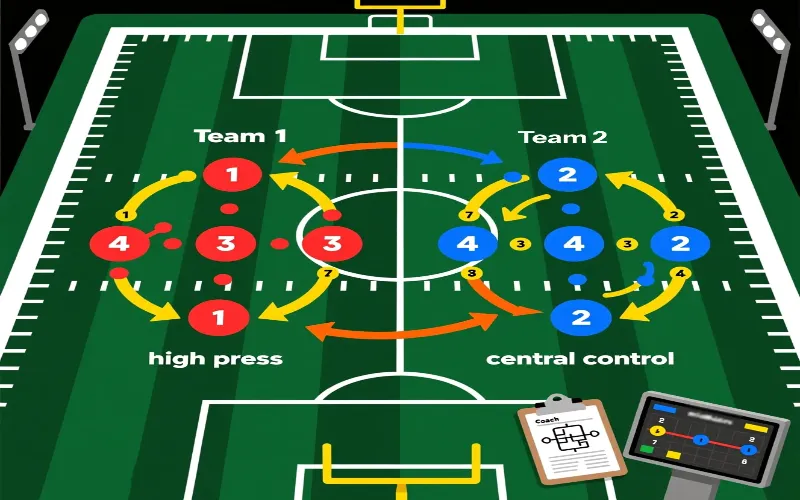
Formation matchups in finals follow different logic than regular matches. A 4-3-3 might dominate a 4-4-2 during the season, but in a final, that 4-4-2's defensive solidity and counter-attacking potential become more valuable. The compression of space, both physical and psychological, changes tactical dynamics entirely.
In-game tactical adjustments happen faster and more dramatically in finals. Managers who might wait until the 70th minute to make changes in league matches will shift systems after 30 minutes if something's not working. Professionals often place live bets based on anticipated tactical changes rather than current match flow.
The tactical trend in recent finals has been toward pragmatism. Even Barcelona at their peak were more conservative in finals than regular matches. Teams average 8% less possession, 15% fewer passes in the final third, and 20% more long balls in finals compared to their season averages. This "tactical regression" is predictable and profitable to bet on.
Set-piece importance multiplies in finals. With open play often deadlocked, a single corner or free-kick can decide everything. Teams that are mediocre at set-pieces during the season often spend weeks perfecting specific routines for the final. Professionals weight set-piece metrics much higher for finals than regular matches.
Weather and Venue Considerations
The conditions on final night matter more than most bettors realize. Professional bettors track weather obsessively, understanding that even small changes in temperature, humidity, or wind can affect outcomes. They've developed sophisticated models for how different conditions impact different styles of play.
Rain is the great equalizer in finals. Technical superiority diminishes when the ball skids unpredictably. Teams that rely on intricate passing triangles struggle, while direct, physical teams thrive. A wet pitch in the 2012 final helped Chelsea frustrate Bayern Munich's possession game. Professionals often bet unders when rain is forecast, as scoring rates drop by approximately 23% in wet conditions.
Wind affects more than just long balls. It changes goalkeeper distribution, set-piece delivery, and even player psychology. Teams attacking against the wind in the first half often play more conservatively, knowing they'll have the advantage after halftime. This creates value in half-time/full-time markets that casual bettors miss.
The venue itself carries psychological weight beyond home advantage (which doesn't exist in neutral finals). Some stadiums feel bigger than others. The Wembley pitch is wider than most, favoring teams with quick wingers. The Stade de France has a running track that distances fans from the action, reducing atmospheric pressure. These subtle factors influence performance in measurable ways.
Altitude is rarely discussed but occasionally crucial. The 1986 final in Seville was played at sea level in crushing heat. The 1997 final in Munich sat 500 meters above sea level. Teams based at different altitudes handle these conditions differently. Brazilian players from Rio struggle more with altitude than those from Sao Paulo. These edges are tiny but real.
Temperature extremes affect different teams unequally. Northern European teams generally handle cold better, while Mediterranean teams thrive in heat. But it goes deeper—teams that press intensively suffer more in heat, while possession-based teams can manage their energy better. A five-degree temperature difference from expected can shift win probabilities by 2-3%.
Manager Experience Factor
The manager standing in the technical area during a Champions League final might be the single most important person in the stadium. Their decisions—tactical, psychological, and emotional—ripple through their team. Professional bettors have learned to quantify managerial impact in ways that go far beyond simple win-loss records.
Managers in their first Champions League final make predictable mistakes. They over-tinker with tactics, changing systems that worked all season. They make substitutions too early or too late. They fail to calm their players' nerves. First-time final managers win just 31% of the time against experienced opponents, even when their teams are favored.
The learning curve is steep but valuable. Managers in their second final perform dramatically better, winning 47% of the time. By their third final, that number jumps to 58%. This isn't just correlation—it's causation. Experienced managers make better decisions under pressure because they've felt that unique pressure before.
Game management in finals separates great managers from merely good ones. Knowing when to slow the tempo, when to make tactical fouls, when to waste time—these dark arts become crucial. Experienced managers also better understand the referee's tendencies in big matches, exploiting their reluctance to make game-changing decisions.
The psychological preparation varies enormously between managers. Some isolate their teams, creating a siege mentality. Others embrace the circus, letting players enjoy the moment. There's no universally correct approach, but consistency matters. Managers who suddenly change their style for finals often confuse their players.
In-game communication becomes critical when the noise makes verbal instructions impossible. Experienced final managers develop elaborate hand signal systems, use specific players as on-field coaches, and position themselves strategically for maximum visual contact. These seemingly minor details can swing tight matches.
Psychological Aspects of Finals
The mental side of Champions League finals fascinates professional bettors because it's both crucial and somewhat predictable. Players and teams respond to final pressure in patterns that repeat across years and generations. Understanding these psychological patterns creates edges that pure statistical analysis misses.
The favorite's burden is real and measurable. Teams expected to win finals play with a tension that underdogs avoid. They take fewer risks, complete fewer dribbles, and attempt fewer through balls. Favorites average 11% fewer shots from outside the box, preferring to work the "perfect" opportunity that never comes. This psychological conservatism creates unders value consistently.
The first goal's importance magnifies beyond normal matches. The team scoring first wins 72% of Champions League finals, compared to 65% in regular matches. But it's not just the goal—it's the psychological release it provides. Teams visibly relax after scoring, while their opponents often panic and abandon their game plan. Professional live bettors position themselves to capitalize on these psychological shifts.
Individual players respond to final pressure in predictable ways based on personality types. Introverted players often perform better in the cauldron atmosphere because they're naturally internally focused. Extroverted players who thrive on crowd energy sometimes struggle with the weight of expectation. Professionals actually track personality types and adjust their scorer and performance prop bets accordingly.
The 15-minute psychological cycles in finals create betting opportunities. Players typically start nervously, settle after 15 minutes, push hard before halftime, start the second half cautiously, and increase intensity around the 60-minute mark. These predictable energy patterns affect everything from corner counts to booking markets.
Team cohesion under pressure separates champions from runners-up. Teams that have overcome adversity together—comeback wins, injury crises, off-field scandals—handle final pressure better. They trust each other when things go wrong. Professionals actually quantify "shared adversity experiences" as a predictive factor.

Risk Management Frameworks
Professional bettors don't survive on winners alone; they survive on superior risk management. Their frameworks for Champions League finals are sophisticated systems designed to maximize edge while minimizing catastrophic loss potential. These aren't gambling strategies—they're investment methodologies.
Position sizing in finals requires special consideration. The standard Kelly Criterion often suggests stakes that are too large given the unique variance of one-off matches. Most professionals cap their final exposure at 2-3% of annual bankroll, regardless of perceived edge. They understand that finals can produce results that no model predicts.
Correlation risk multiplies in finals. Betting on a team to win, their striker to score first, and over 2.5 goals might seem like three separate bets, but they're highly correlated. If the team loses 0-0, all three fail. Professionals limit correlated exposure to no more than 1.5% of bankroll across all related positions.
Hedging strategies become crucial as the match approaches and during play. Professionals often bet both sides at different times, locking in profit regardless of result. They'll back Team A at +200 early in the week, then lay them at +150 once public money shortens the price. This isn't indecision—it's risk-free profit extraction.
The emotional hedge is something professionals avoid but understand. Betting against your own team "softens the blow" of defeat but corrupts decision-making. Professionals either bet with complete objectivity or avoid matches where they have emotional investment. There's no middle ground in professional betting.
Stop-loss disciplines save professionals from chase betting and tilt. They set maximum loss limits for finals—typically 3-5% of bankroll—and stick to them religiously. Once that limit is reached, they're done, regardless of how strong they feel about late opportunities. This discipline separates professionals from problem gamblers.

Building a Professional Strategy
Creating a professional-grade Champions League final betting strategy isn't about finding one perfect system—it's about building a robust approach that performs across different scenarios. The professionals I've studied don't rely on single strategies; they deploy multiple complementary approaches that work together.
The foundation starts months before the final. Professionals track every Champions League match from the round of 16 onward, building detailed databases on team performance under pressure. They note how teams respond to going behind, how they manage leads, how they perform in hostile environments. This data becomes invaluable when constructing final positions.
Ensure you are prepared by following our UCL betting checklist.
Pre-match positioning typically involves 60-70% of their final bankroll allocation. These are high-conviction bets placed 3-7 days before kickoff, when lines are softest. The positions are diversified across different markets: match result, totals, props, and specials. No single bet exceeds 1% of bankroll, regardless of confidence level.
Live betting reserves (the remaining 30-40%) are deployed strategically based on pre-determined scenarios. If the match starts as expected, they might not bet at all. But if something unusual happens—an early red card, unexpected tactical setup, weather change—they're ready to pounce. These scenario plans are written before the match to avoid emotional decision-making.
The recording and review process is what truly separates professionals from amateurs. Every bet is logged with reasoning, not just result. After the final, they spend hours reviewing decisions, analyzing what worked and what didn't. This continuous improvement process is why professional strategies evolve and remain profitable while casual systems eventually fail.
Portfolio balancing ensures survival through variance. Professionals might have twenty positions on a single final, each small enough that losing all wouldn't be catastrophic. They think in terms of expected value across all bets, not individual winners. A 55% strike rate with proper sizing beats a 70% rate with poor management.
The Long-Term Perspective
Professional Champions League final betting isn't about hitting one big score—it's about consistent edge exploitation over many years. The professionals who survive and thrive approach finals with a perspective measured in decades, not minutes.
Bankroll preservation trumps bankroll growth. Professionals would rather miss opportunities than risk ruin. They've seen talented bettors flame out by over-betting their edge in high-profile matches. The goal is to be betting on Champions League finals in ten years, not to retire from one winning bet.
Edge degradation is a constant concern. Markets become more efficient over time as information spreads and bookmakers improve their models. Strategies that worked five years ago might be worthless today. Professionals constantly research, test, and refine their approaches, staying ahead of market evolution.
The learning investment never stops. Professionals spend thousands of hours studying matches, reading tactical analyses, understanding sports science developments, and networking with other sharp bettors. They treat betting like a profession because, for them, it is one. The casual bettor's entertainment is their continuing education.
Psychological sustainability matters as much as financial sustainability. The stress of professional betting is immense, especially during high-stakes events like finals. Successful professionals develop routines, support systems, and outlets that maintain their mental health. They know that emotional stability directly impacts decision quality.
Network effects amplify professional success. The best bettors share information, discuss strategies, and challenge each other's thinking. They're not lone wolves but part of communities that collectively outsmart the market. Access to these networks often matters more than individual analytical ability.

Final Thoughts on Professional Approaches
After years of studying professional Champions League final betting, I've learned that success comes not from secret formulas or inside information, but from disciplined application of sound principles. Professionals aren't necessarily smarter than recreational bettors—they're just more systematic, patient, and emotionally controlled.
The gap between professional and recreational betting is widening, not narrowing. As markets become more efficient, edges become smaller and harder to find. Only those with professional-grade tools, discipline, and bankrolls can consistently exploit these tiny advantages. The days of casual bettors stumbling into long-term success are largely over.
But here's the encouraging truth: anyone can adopt professional principles, even if they can't match professional resources. You might not have sophisticated models or inside information, but you can practice disciplined bankroll management, systematic record keeping, and emotional control. These fundamentals alone will put you ahead of 95% of bettors.
The Champions League final will always be special—that mixture of tactical excellence, individual brilliance, and raw emotion that creates football's greatest spectacle. For professional bettors, it represents the ultimate test of their craft. They approach it with respect, preparation, and discipline that matches the players on the pitch.
Whether you're a seasoned professional or an ambitious amateur, remember that successful Champions League final betting is a marathon, not a sprint. The strategies that generate consistent profit aren't exciting or revolutionary—they're methodical applications of proven principles. That's not as sexy as promising overnight riches, but it's the truth about how professionals really approach football's biggest match.
