 ChampLeagueFinalBet
 Anytime Goalscorer Strategy for UCL Finals
 Available in US
The anytime goalscorer market removes the timing element from goalscorer betting. Your player simply needs to score at some point during the match, whether that is the first minute or the last. This seemingly straightforward proposition becomes more nuanced in Champions League finals, where low-scoring matches limit opportunities and the pressure of the occasion affects who finds the net.
Unlike first goalscorer betting, where you are predicting a specific sequence of events, anytime goalscorer asks only whether a player will be among those who score. In a final that produces two goals, four different players might have had genuine chances but only two converted. The anytime goalscorer bettor needs their selection to be one of the converters rather than the near-misses.
Spot the sharp scorers on our starting page.
Understanding Anytime Goalscorer Pricing
Bookmakers price anytime goalscorer markets by estimating each player's probability of scoring at least once. For central strikers, this probability might be 35-45% in a typical match, translating to odds around +120 to +180. Attacking midfielders typically price between +200 and +350. Defenders and goalkeepers extend to +1500 and beyond.
The mathematics differ from first goalscorer because multiple players can hit anytime goalscorer simultaneously. If a match finishes 3-2, five different players have won their anytime goalscorer bets, assuming no one scored twice. This is why anytime goalscorer odds are significantly shorter than first goalscorer for the same player.
Finals affect this pricing in important ways. The expected total goals in a final is lower than a typical knockout match, which compresses everyone's scoring probability. A striker who might have 40% anytime goalscorer probability in a semi-final might drop to 30% in the final because fewer total goals are expected. Bookmakers should adjust their odds accordingly, but the degree of adjustment varies.
Comparing Finals to Tournament Averages
The disparity between final scoring patterns and tournament averages creates betting opportunities. During the 2024-25 Champions League season, the league phase produced 3.26 goals per game, a record high. But finals from 2020 to 2024 averaged fewer than 1.5 goals per match in regulation time. That is a massive difference that affects every player's scoring probability.
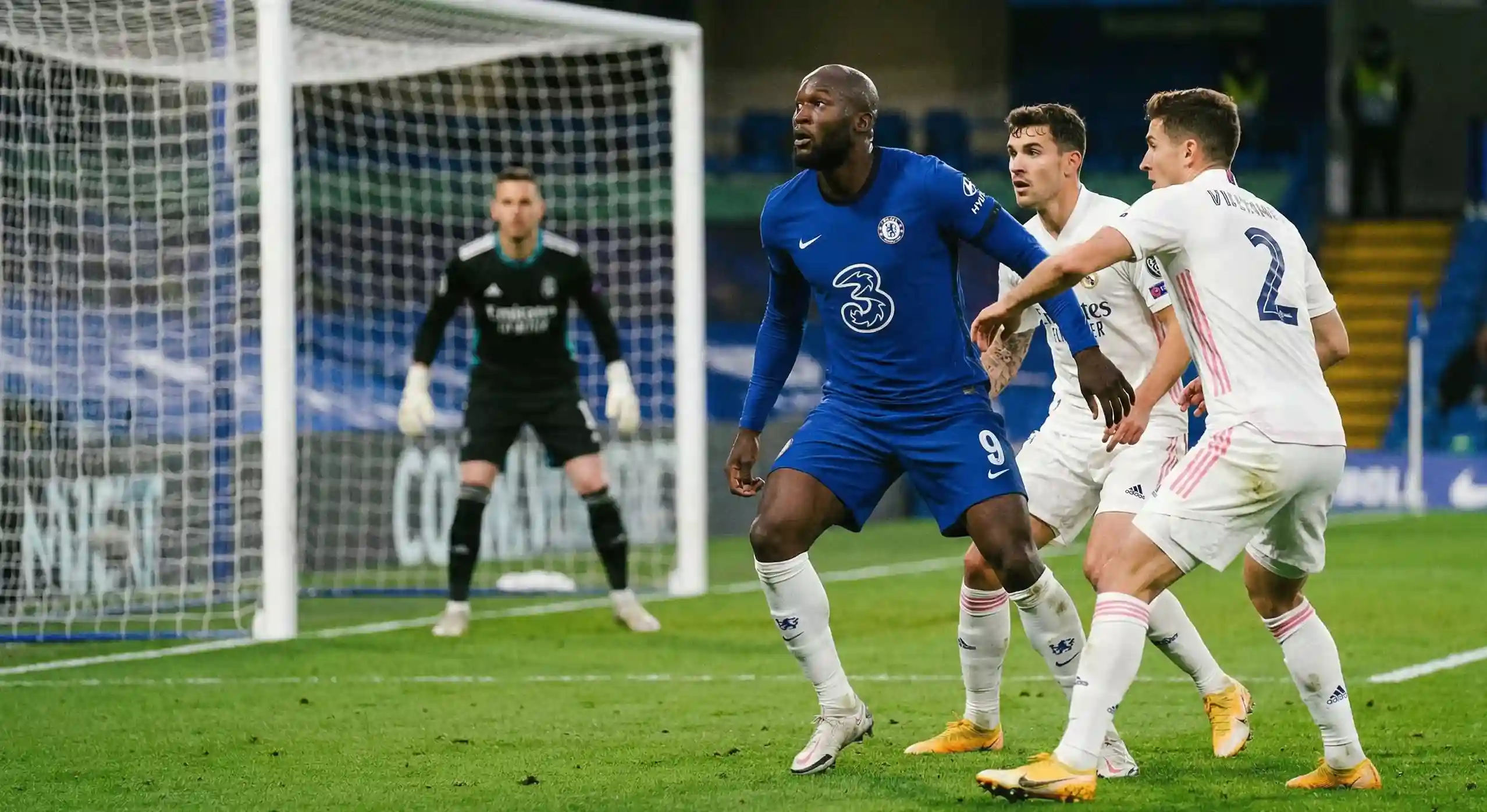
Bookmakers know this disparity exists but face a commercial problem. If they price Erling Haaland at +200 for anytime goalscorer in a final, matching the reduced goal expectation, recreational bettors who backed him at +120 during the tournament will feel cheated. The psychological anchoring to tournament odds creates resistance to appropriately adjusted final pricing.
Some books shade their final anytime goalscorer odds shorter than pure probability suggests because they know public money will flow to star forwards regardless. Other books maintain more accurate pricing but accept lower handle on marquee players. Shopping across multiple books is essential for finding the best value.
Player Selection Criteria
Identifying value in anytime goalscorer markets requires evaluating several factors beyond raw goal-scoring ability. Minutes played is the starting point: a player who is likely to be substituted at sixty minutes has significantly lower anytime goalscorer probability than one who will play the full match plus extra time if needed.
Set-piece involvement matters enormously in finals. Corners and free kicks produce a higher percentage of goals in finals than in typical matches because organised defences are harder to break down in open play. Players who attack set pieces aggressively, particularly tall centre-backs and midfielders, offer value that pure goal-scoring statistics might not capture.
Penalty-taking responsibility can transform a midfielder or winger into a genuine anytime goalscorer candidate. If your selected player is the designated penalty taker and a penalty is awarded, their probability of scoring jumps dramatically regardless of their open-play scoring ability.
Recent form heading into the final deserves consideration but should not be overweighted. Players who scored crucial goals in the semi-finals attract market attention, often shortening their odds beyond fair value. Meanwhile, players who created chances but did not convert might offer better value because their underlying performance suggests they remain capable of scoring.
The Substitute Consideration
Substitutes present a unique angle in anytime goalscorer betting. Players who regularly come off the bench in the final thirty minutes face teams with tired defenders and more open spaces. They also benefit from fresh legs when everyone else is fatigued.
Gareth Bale's memorable Champions League final performances for Real Madrid often came after he entered as a substitute. Divock Origi scored Liverpool's crucial second goal in the 2019 final after replacing Roberto Firmino. Substitutes face lower defensive intensity precisely because their entry often coincides with the trailing team pushing forward and the leading team dropping deeper.
The challenge is that substitute anytime goalscorer bets typically void if the player does not enter the match. Some bookmakers offer "to score if they play" markets that account for this, but pricing is usually less favourable. The alternative is accepting the void risk and betting on players you are confident will appear as substitutes based on manager tendencies.
Super-subs with strong track records of impact goals deserve attention. Identify players who regularly score after coming off the bench during the tournament and check whether their substitute anytime goalscorer odds offer value relative to their demonstrated ability.
Combining Anytime Goalscorer with Other Markets
Anytime goalscorer bets can complement other positions on the same final. If you have backed under 2.5 goals, adding anytime goalscorer on a player whose goal might be the only one provides a hedge: if the match produces a goal, at least you might win the anytime goalscorer even if the under loses.
Correct score combinations work naturally with anytime goalscorer. If you believe the final will finish 1-0 to Team A, backing the likely scorer from Team A on anytime goalscorer gives you two positions that can win together. Your correct score pays the long odds while your anytime goalscorer provides smaller but more probable returns.
Avoid combinations that contradict each other. Backing anytime goalscorer on five different players while also backing 0-0 on correct score creates internal conflict. If the 0-0 hits, all five anytime goalscorer bets lose. If any player scores, your 0-0 loses. Define your expected match outcome first, then select goalscorer bets that align with that vision.
Goalscorer Accumulators in Finals
Some bettors combine multiple anytime goalscorer selections into accumulators for enhanced returns. In a final context, this approach carries significant risk because the low-scoring nature of these matches means each leg of the accumulator is less likely to win than it would be in a typical match.
A three-leg anytime goalscorer accumulator in a semi-final might have reasonable probability because both matches combined are expected to produce five or six goals. The same accumulator structure in a final, where two or three goals is the realistic expectation, becomes much less viable.
If you do pursue goalscorer accumulators in finals, consider same-game combinations rather than multi-match structures. Backing two players from the same team to score in a final that you believe will be one-sided is more coherent than random multi-match combinations. The 2025 final, where PSG scored five times against Inter, would have rewarded same-game accumulators on multiple PSG attackers handsomely.
Reading the Pre-Match Market
Anytime goalscorer odds move in the days before a final based on team news, public sentiment, and sharp action. Monitoring these movements helps identify where value might exist.
If a player's odds shorten significantly without obvious reason like an injury to a competing player or tactical news, public money is likely driving the move. This is often a signal to look elsewhere, as the market has become less efficient on that selection.
Conversely, if a player's odds drift longer despite their team looking strong in training footage and press conferences, the market might be undervaluing them. These drifts often occur when recreational money concentrates on headline names, causing bookmakers to extend odds on secondary options to balance their book.
Final day team news is critical. If a key player is confirmed out, their goals must come from somewhere else. The players most likely to benefit from increased opportunity often see odds compress immediately after team news breaks. Acting quickly can capture value before the market fully adjusts.
Managing Expectations

Even with perfect analysis, anytime goalscorer betting in finals remains probabilistic. A player with 30% probability of scoring will fail to score in seven of ten finals. This is not bad luck or poor analysis but simply how probability works.
The goal is to consistently identify players whose true probability exceeds their implied odds. If you correctly identify a player at 30% when the market implies 25%, you have an edge. But that edge reveals itself over many bets, not any individual final.
Compare these odds with the potential of the first goalscorer market.
Track your anytime goalscorer selections across multiple seasons to assess your actual edge. If you consistently back players at +200 whose true probability is 30%, you should profit over time even though most individual bets lose. Without tracking, you cannot distinguish skill from variance.
Stake sizing should reflect the uncertainty inherent in the market. Unlike match result betting where you might use two or three percent of bankroll, anytime goalscorer exposure should typically stay around one percent per selection. This allows for the higher variance without risking significant bankroll damage from a cold streak.
The Psychological Element
Finals bring out unpredictable performances. Players who have been clinical all season miss clear chances when the trophy is on the line. Others who seemed inconsistent suddenly find another level when it matters most.
Desire Doue became the youngest player to score twice in a Champions League final during PSG's 2025 victory, a performance few would have predicted based on his regular season output. Meanwhile, established stars have gone missing in finals throughout history.
This unpredictability argues for spreading anytime goalscorer exposure across multiple players rather than concentrating on a single star. The expected star might freeze while the unexpected contributor delivers. Backing three or four players at appropriate stakes captures more of this uncertainty than backing one heavily.
Champions League finals are defined by the players who score in them. Anytime goalscorer betting offers a direct way to profit from those moments, but success requires understanding both the mathematics of reduced goal expectation and the psychological factors that determine who rises to the occasion.
