 ChampLeagueFinalBet
 Correct Score Betting: The 1-0 Phenomenon
 Available in US
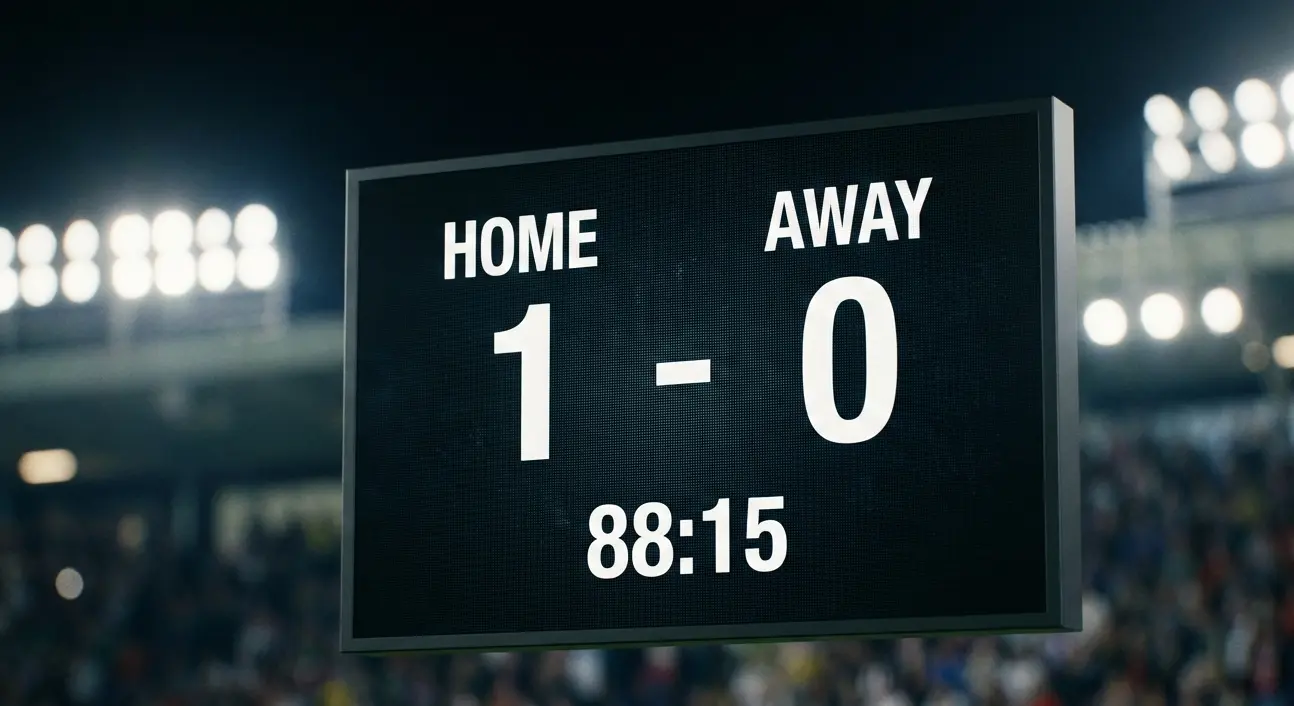
There is a scoreline that haunts Champions League finals. It appears with remarkable consistency, defying the attacking talent assembled on the pitch and the millions watching who expect fireworks. The 1-0 result has become so prevalent in finals that ignoring it means leaving money on the table.
Correct score betting is inherently difficult. Predicting the exact outcome of a football match involves forecasting not just which team will score more but precisely how many each team will manage. In regular matches, this is largely a lottery. In Champions League finals, patterns emerge that transform correct score from pure gambling into something approaching strategy.
Target high payouts on our wagering homepage.
The 1-0 Dominance
From 2020 through 2024, four of five finals ended 1-0. Bayern beat PSG 1-0 in 2020. Chelsea beat Manchester City 1-0 in 2021. Real Madrid beat Liverpool 1-0 in 2022. Manchester City beat Inter 1-0 in 2023. Only the 2024 final broke the streak with Real Madrid's 2-0 victory over Dortmund, and then 2026 delivered PSG's 5-0 demolition of Inter. Even accounting for that outlier, the 1-0 scoreline has occurred in six of the last fifteen finals examined. That is 40% of all finals ending with a single goal.
Yet bookmakers typically price 1-0 in either direction somewhere between +500 and +800 combined. A +600 price implies roughly 14% probability. When 1-0 results occur 40% of the time, you can see the magnitude of the mispricing. Even if we price each team's 1-0 separately at +600, the combined implied probability is still less than 30% for an outcome that happens 40% of the time.
Why does this gap persist? Because correct score markets are entertainment products as much as betting opportunities. Recreational bettors want to back exciting scorelines. They envision 3-2 thrillers and 4-3 classics. Nobody dreams of a cagey 1-0 decided by a scrappy second-half goal. So money flows to the higher scores, bookmakers adjust accordingly, and value accumulates on the boring outcomes that actually happen.
Understanding the Price Structure
Correct score pricing follows a predictable pattern. The most likely scorelines according to pre-match odds are usually 1-1, 2-1 for either team, and 1-0 for the favourite. These typically range from +500 to +800. Less common scorelines like 3-0 or 2-2 might be +1000 to +1500. Extreme scores like 4-3 or 5-1 push toward +2500 or longer.
The structure reflects both probability and liability management. Bookmakers know that sharp bettors target 1-0 and 0-0 in finals, so they are careful not to offer excessively generous prices on these outcomes. But they cannot price them at true probability without alienating recreational customers who want some chance of a big payout on popular scorelines.
The 0-0 result deserves particular attention. It has occurred in three of the last twenty finals at regulation time, a 15% hit rate. Typical pricing sits around +1000 to +1200, implying 8-9% probability. That gap is smaller than the 1-0 mispricing but still represents value. Furthermore, 0-0 is unique in providing coverage regardless of which team you expect to struggle offensively.
The 2-0 scoreline has become more common recently, occurring in both 2024 and 2026 (though the 2026 final ultimately reached 5-0). At typical prices around +800 to +1000, the value is less clear than 1-0, but it represents the most likely outcome when one team significantly outclasses the other.
Dutching Correct Scores
Professional bettors rarely back a single correct score in isolation. The variance is simply too high. Instead, they use dutching, a technique that spreads stake across multiple related outcomes to guarantee profit regardless of which specific selection wins.
The classic final dutching strategy covers 1-0 for either team, 0-0, and sometimes 2-0 for the favourite. This portfolio captures the four most common final outcomes while guaranteeing profit if any hits. The mathematics require calculating stakes such that returns are equal regardless of outcome.
Assume the following prices: Team A 1-0 at +550, Team B 1-0 at +700, Draw 0-0 at +1000. To dutch these with a total stake of 100 units and equal returns, you would calculate proportional stakes based on the inverse of decimal odds. Team A 1-0 gets roughly 35 units. Team B 1-0 gets approximately 28 units. Draw 0-0 receives about 19 units. You keep some reserve for other potential outcomes or accept that a 2-1 or 2-0 result loses your entire dutch stake.
The weakness of dutching is that you need at least one of your selected outcomes to hit. If the final produces 2-1, 3-1, or any scoreline outside your dutch, you lose everything staked. This makes outcome selection critical. In finals, covering the low-scoring results has proven more reliable than trying to capture all possibilities.
Single-Outcome Correct Score Bets
Some bettors prefer targeting a single correct score with high conviction rather than spreading across multiple outcomes. This approach accepts higher variance in exchange for larger potential returns when correct.
The key to single-outcome betting is identifying specific match dynamics that point toward one scoreline. If you believe Real Madrid will dominate possession against a defensively-organised opponent, 1-0 Madrid is logical. If you expect a tactical stalemate between two cautious managers, 0-0 becomes attractive. If one team has clear finishing superiority but both defences are suspect, 2-1 might be the play.
The 2023 final illustrated this approach. Manchester City were heavy favourites against Inter, but Inter's defensive organisation was exceptional throughout the tournament. City lacked a clinical finisher despite their possession dominance. The setup pointed toward a tight match where City would eventually break through once. The 1-0 result validated this analysis perfectly.
Conviction-based correct score betting requires resisting the temptation to over-diversify. If your analysis genuinely points to 1-0 as the most likely outcome, splitting your stake across 1-0, 2-0, and 2-1 dilutes your position on what you believe is the best value. The question is whether your conviction is justified or whether you are overconfident in your ability to predict exact scorelines.
Timing Considerations
Correct score odds move less dramatically than match result or handicap markets in the days before a final. The prices are already long enough that small adjustments do not significantly affect value. However, some movement occurs as team news solidifies.
Late injury information can shift correct score pricing meaningfully. If a team's primary goalkeeper is ruled out, clean sheet probability for that side drops, making scorelines like 2-1 or 3-1 against them relatively more attractive. If a key striker misses out, 0-0 and the opponent's 1-0 become marginally more likely.
Pre-match is generally the optimal time for correct score bets in finals. Live correct score markets exist but suffer from rapid price changes that make execution difficult. The odds on 1-0 when the match is goalless at halftime are drastically shorter than pre-match, often offering no value whatsoever.
That said, specific live opportunities arise occasionally. If a match is 0-0 at seventy minutes and one team appears clearly superior, their 1-0 might still offer decent value as the market prices in the possibility of 0-0 going to extra time. Conversely, if the match has been open with both teams creating chances, backing 0-0 late becomes increasingly poor value.
Managing the Variance

Correct score betting on finals must be approached with strict bankroll discipline. Even with significant edge, you will experience long losing streaks. Six consecutive 1-0 finals sounds profitable in hindsight, but if you backed different 1-0 outcomes and missed, you could easily have lost five or six finals in a row despite the scoreline being technically correct.
Professional bettors limit correct score exposure to one percent of bankroll or less per final. The odds are long enough that even small stakes produce meaningful returns when correct. There is no need to over-leverage a high-variance market.
Accurate scoring analysis helps when betting on late goals in the final.
Track your results over years rather than individual matches. A strategy with positive expected value on correct scores will show profit over ten or fifteen finals but may look like random noise over three or four. The sample size is simply too small for short-term results to be meaningful.
Avoid the trap of chasing after a losing final by increasing stakes on the next one. The variance in correct score betting is not something to fight against; it is something to accept and manage. Your edge comes from price inefficiency, not from increasing stake size.
Practical Implementation of Bankroll Discipline
When analysing an upcoming final for correct score value, start by assessing the defensive profiles of both teams. How many clean sheets did they keep in the knockout rounds? What is their expected goals against per match? Teams that consistently limit opponents to low-quality chances are likely to appear in low-scoring finals.
Next, examine finishing efficiency. Some teams routinely outscore their expected goals due to clinical forwards or lucky finishing. Others consistently underperform xG despite creating chances. In finals, where nervousness affects shooting, underperforming xG becomes more common. The team with the best finisher under pressure often decides tight matches with a single goal.
Consider the tactical matchup. When a possession-dominant side faces a counter-attacking opponent, the game often produces few goals because the possession team struggles to break down organised defence while the counter-attacking side sacrifices attacking frequency for defensive solidity. These matches scream 1-0 or 0-0.
Finally, check the market for specific value. Calculate implied probabilities from the offered odds and compare to your assessment based on the above factors. If you believe 1-0 either way is 35% likely but the market implies 28%, you have found value. If the market agrees with your assessment, there may be better opportunities in other markets.
The correct score market in finals rewards patience and discipline. The recreational bettor wants 3-2 at +2500. The professional bettor takes 1-0 at +550, knowing that boredom is often profitable when everyone else is chasing excitement.
