 ChampLeagueFinalBet
 Venue Analysis for UCL Betting
 Available in US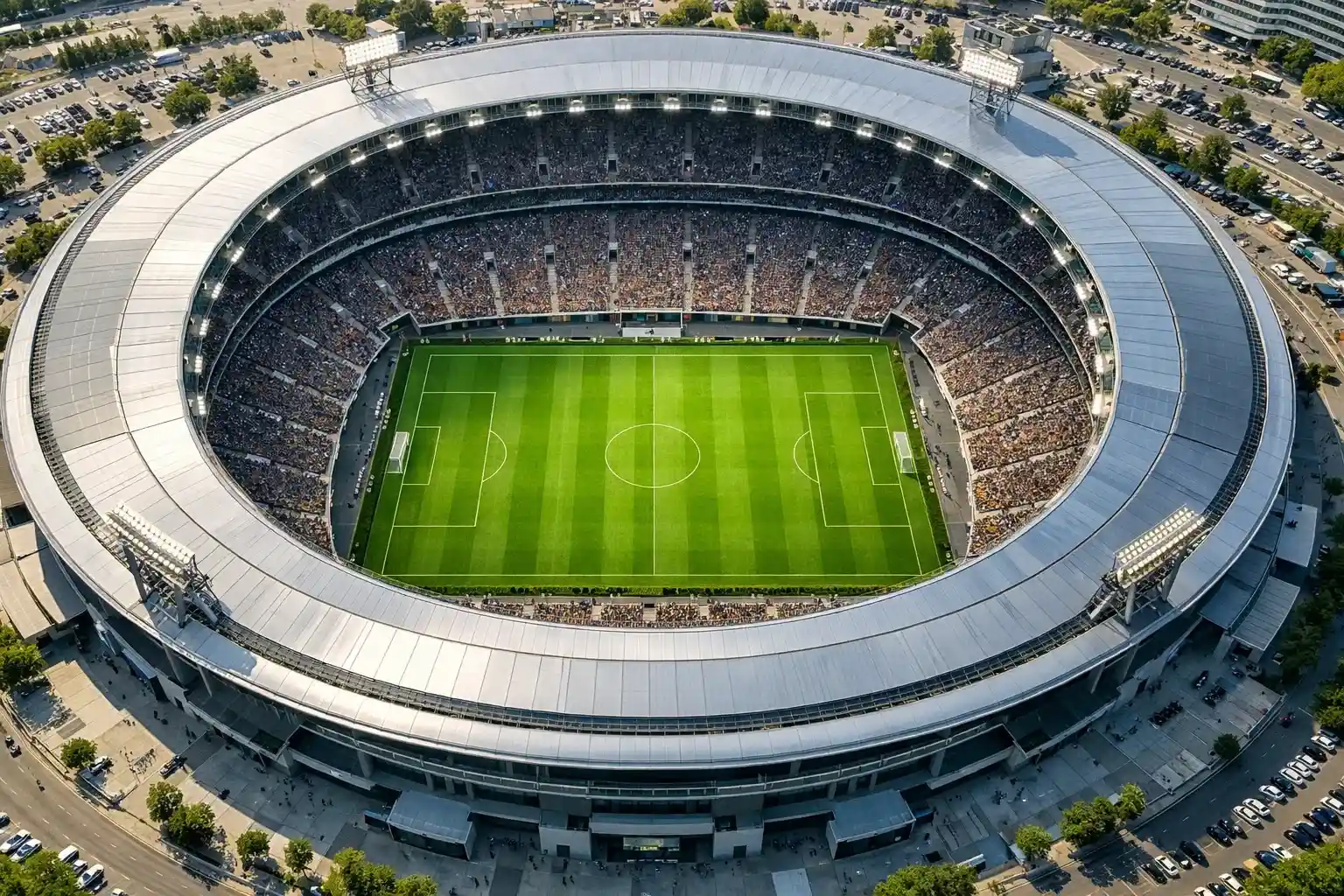
The neutral venue of a Champions League final affects match dynamics in ways that create betting opportunities. Unlike knockout rounds where home advantage matters, finals take place on neutral ground where neither team enjoys familiar surroundings. Understanding how specific venues influence play helps refine probability estimates across multiple markets.
The 2026 final at Budapest's Puskas Arena will be Hungary's first time hosting club football's premier match. This 67,000-seat stadium opened in 2019 and has already hosted the 2020 UEFA Super Cup and 2023 Europa League final, providing some historical data for analysis.
Study the stadium factors on our UCL final portal.
Neutral Ground Dynamics
True neutral venues eliminate home advantage but do not create equal conditions for all teams. Certain venues favour certain playing styles based on pitch dimensions, surface quality, altitude, and atmospheric conditions.
Teams accustomed to large, wide pitches perform differently on compact venues. Spanish clubs historically built their passing game on expansive Camp Nou and Bernabeu surfaces. English clubs developed on tighter Premier League pitches. When finals take place on pitches that suit one style over another, probability distributions shift.
Travel distance to the venue affects squad freshness. A final in Western Europe advantages Western European clubs compared to Eastern European or Turkish clubs. The 2026 Budapest final sits centrally in Europe, minimising travel disparity between potential finalists from different regions.
Fan allocation affects atmosphere. UEFA typically splits tickets between the two finalists, but fans of clubs geographically closer to the venue often obtain more tickets through secondary markets. This can create atmosphere advantages that affect player performance.
Pitch Characteristics
Modern stadiums maintain pitches to high standards, but variations exist that affect play.
Pitch dimensions at the Puskas Arena are 105 by 68 metres, the standard UEFA dimensions. This provides no advantage to teams accustomed to non-standard pitches, but teams that play expansive football have full space to operate.
Surface quality in late May depends on maintenance and weather. Budapest's continental climate produces warm May temperatures that can stress grass. However, modern hybrid surfaces and stadium technology typically ensure excellent playing surfaces regardless of external conditions.
Ball speed varies based on grass length and moisture. Venues that maintain shorter, drier grass produce faster ball movement that suits technical passing teams. Longer, wetter grass slows play and suits physical, direct styles. Research venue tendencies from previous matches hosted.
Weather Considerations

May weather in host cities varies significantly and affects betting markets.
Budapest in late May averages temperatures around 20-25 degrees Celsius with moderate humidity. These conditions suit technical football without extreme heat that would sap energy or cold that would affect ball control.
Rain probability exists in any May location. Wet conditions affect passing accuracy, increase sliding challenges and potential penalties, and can favour physical over technical teams. Monitor weather forecasts in the days before the final and adjust probability estimates accordingly.
Wind rarely affects enclosed modern stadiums but matters for venues with open ends or low rooflines. The Puskas Arena's enclosed design minimises wind influence on play.
Evening kick-offs avoid peak heat. The 2026 final's 18:00 CET start time means comfortable temperatures throughout the match, removing heat as a significant factor.
Historical Venue Patterns
Certain venues have produced consistent patterns across multiple finals they have hosted.
Wembley Stadium has hosted multiple modern finals with generally high-quality, open matches. The iconic venue's atmosphere and pitch quality allow technical football to flourish.
The Stade de France has produced mixed results, with some tactical battles and some open games. Paris weather in late May can vary significantly.
Madrid's stadiums have historically produced finals that favour Spanish clubs familiar with the surroundings, though neutral venue principles suggest this advantage should be psychological rather than tactical.
The Puskas Arena's limited final history includes the 2020 Super Cup (Bayern 2-1 Sevilla in extra time) and 2023 Europa League final (Sevilla 1-1 Roma, Sevilla won on penalties). Both matches required extra time, potentially suggesting the venue produces tight, low-scoring affairs, though two matches provide limited statistical significance.
Altitude Effects
Most European final venues sit near sea level, but altitude has affected past matches.
Madrid sits at 650 metres altitude, sufficient to slightly increase ball flight and player fatigue compared to sea-level venues. Teams from lower-altitude locations might experience marginal disadvantage.
Budapest sits at approximately 100 metres altitude, effectively sea level for football purposes. No altitude adjustment is necessary for 2026 final analysis.
Future finals at higher-altitude venues would require probability adjustments, particularly for goal totals and late-game patterns.
Stadium Atmosphere
Enclosed stadiums with steep seating create intense atmospheres that can affect player performance and referee decisions.
The Puskas Arena's design creates strong acoustics that amplify crowd noise. Teams not accustomed to intense atmospheres might be affected, though Champions League finalists have typically played in loud environments throughout the tournament.
Crowd composition depends on finalist identities. If one finalist has significantly more supporters present, atmosphere advantage accrues to them. Hungarian local support might slightly favour any finalist with Hungarian connections, though major European clubs would bring substantial travelling support regardless.
Referee psychology can be influenced by crowd pressure. Research suggests referees award marginally more decisions to teams with louder support, though professional Champions League referees are selected specifically for resistance to pressure.
Betting Market Implications
Venue analysis should inform multiple betting markets.
Goal totals might adjust based on venue history. If a venue has consistently produced low-scoring matches, under goals becomes more attractive regardless of finalist identities.
Playing style matchups interact with venue characteristics. A possession-based team on a large pitch has advantage over a counter-attacking team. The reverse applies on compact pitches.
Weather-dependent markets like cards and fouls are affected by pitch conditions. Wet pitches produce more sliding challenges and potential yellow cards.
Extra time and penalty markets are affected by venue conditions. If weather or pitch conditions favour physical play, extra time becomes more likely as technical quality diminishes.
Pre-Final Venue Research
Conduct specific venue research once the final location is confirmed.
Review all competitive matches hosted at the venue in the past two seasons. Calculate goal averages, cards averages, and other market-relevant statistics specific to that venue.
Compare venue statistics to tournament averages. If the venue produces 0.3 fewer goals per match than tournament average, adjust your goal market probability estimates accordingly.
Research how previous finalists at this venue performed relative to expectations. If underdogs have historically overperformed at this venue, factor that into your probability estimates.
Assess logistical factors affecting each finalist. Which team has better travel arrangements? Which team's supporters will attend in greater numbers? Which team has players with previous experience at this venue?
The Budapest Factor

The Puskas Arena offers specific characteristics relevant to 2026 final betting.
Central European location minimises travel disparity for most potential finalists. English, Spanish, German, Italian, and French clubs all face similar journey lengths.
The stadium's modern design and facilities ensure optimal playing conditions. No finalist will face unfamiliar or substandard venue conditions.
Combine this with a tactical overview of manager tactics in the final.
Hungarian football culture emphasises attacking play, and the stadium has hosted matches with goals. However, the limited sample of major finals prevents confident generalisation.
The 18:00 kick-off time, new for 2026, means the match concludes before dark in late May. This affects television presentation but likely has minimal on-pitch impact.
Budapest as a destination attracts travelling fans from across Europe. Both finalists should receive strong supporter turnout regardless of their home location.
Venue analysis represents one component of comprehensive final betting analysis. Combined with team quality assessment, tactical matchup analysis, and market efficiency evaluation, venue factors help refine probability estimates that create betting edge.
